
The market for 2000 penny value shows interesting data regarding price increases over the last two decades.
Prices for standard uncirculated coins grow at a steady rate of approximately 2% to 3% every year.
Rare error coins or high-grade examples show much higher growth, reaching 10% to 15% annually in some periods.
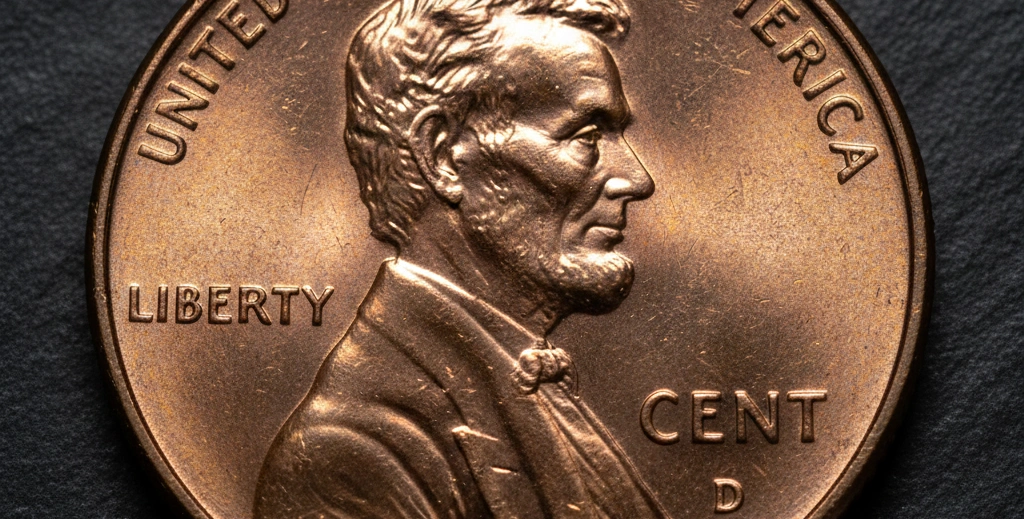
Investors buying these coins often wait for several years to see a significant return on their money.
The following table shows the estimated price growth for a 2000 D penny in MS 67 condition over a five-year period.
Year | Estimated Market Price | Annual Percentage Increase |
2019 | $18.00 | Base Year |
2020 | $18.60 | 3.3% |
2021 | $19.50 | 4.8% |
2022 | $21.00 | 7.7% |
2023 | $23.50 | 11.9% |
Data shows that the demand for high-quality 2000 D pennies remains strong among specialized collectors.
The increase in price usually happens because the number of coins in perfect condition decreases over time.
Oxidation affecting the copper surface causes many coins to turn brown or develop spots.
Protecting coins in plastic holders prevents this damage and maintains the market value.
Identifying Rare Mint Errors
Mistakes made by the minting machines create the most valuable 2000 D pennies found in circulation today.
One common error involves a "die clash" occurring when the upper and lower dies hit each other without a coin blank inside.
This process leaves faint marks of the reverse design on the obverse side of the coin.
Another rare error is the "off-center strike" happening when the coin blank is not positioned correctly in the machine.
A coin missing 10% to 50% of the design because of an off-center strike carries a high premium.
The "doubled die" error, though less common for the 2000 D than the 1995 penny, still appears in some specialized catalogs.
Finding a doubled die requires looking at the letters and numbers for a slight secondary image.
Collectors searching for these errors often spend hours using the coin value checker app to check every detail.
Record Auction Prices for the 2000 D Penny
High-grade 2000 D pennies have sold for surprisingly high prices at major coin auctions.
In 2012, a 2000 D Lincoln Penny graded MS 69 RD by PCGS sold for over $500.
Another specimen reaching the same high grade sold for $460 in a more recent auction held in 2018.
These prices depend heavily on the "Red" (RD) designation given to coins with at least 95% original copper color.
Coins turning "Red-Brown" (RB) or "Brown" (BN) lose about 50% to 80% of their potential auction value.
The following list describes specific record-breaking sales for this coin:
MS 69 Red: Sold for $518 in 2012 at Heritage Auctions.
MS 68 Red: Often sells for $30 to $60 depending on the current market demand.
Major Error (50% Off-Center): Can reach prices between $100 and $250.
The rarity of the MS 69 grade is extreme because only a few pieces have ever received this score.
No 2000 D penny has reached the perfect grade of MS 70 yet.
The first person finding an MS 70 example will likely see a record price exceeding $2,000.
Technical Comparison: 2000 P vs 2000 D
Collectors often compare the pennies from the Philadelphia Mint (no mint mark or P) with those from Denver (D).
The Philadelphia Mint produced 8,774,220,000 pennies in the year 2000.
Having a higher production than Denver, the Philadelphia coins are generally considered less rare in high grades.
The 2000 P "Wide AM" variety is a very famous error where the letters A and M in "AMERICA" are separated.
The 2000 D penny does not have a confirmed "Wide AM" business strike error of the same importance.
However, the Denver coins often show better striking details on Lincoln’s hair and the memorial building.
The following table compares the two mints based on production and rarity.
Feature | 2000 P (Philadelphia) | 2000 D (Denver) |
Production Volume | 8.77 Billion | 5.50 Billion |
Famous Error | Wide AM Variety | Die Clashes / Off-center |
Highest Grade Found | MS 69 | MS 69 |
Average MS 67 Value | $12.00 - $15.00 | $18.00 - $25.00 |
The Denver coins maintain a slightly higher price in the MS 67 grade due to the lower production numbers.
Collectors building a complete set of Lincoln cents with the coin identifier app must include both versions to be successful.
Physical Composition and Preservation
The physical composition of a penny made in 2000 affects its rarity and value in the long run.
The coin consists of 97.5% zinc and 2.5% copper deposited on a zinc core.
Zinc, being a chemically active metal, leads to the formation of "zinc bubbles" under the surface of copper.
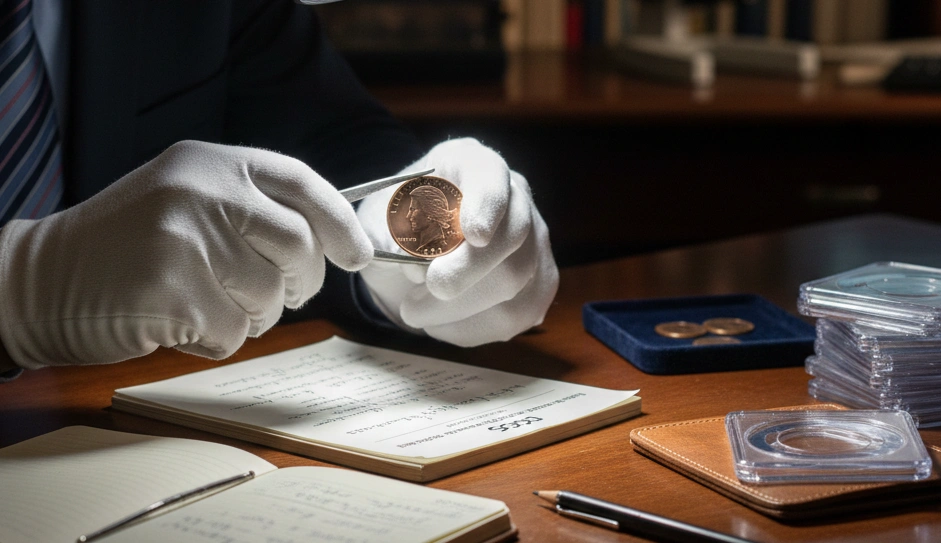
These bubbles, which appear during or after the minting process, reduce the quality of the coin.
Finding a coin without any bubbles or surface problems is the main goal for serious investors.
The weight of a standard penny with a face value of 2000 grams is exactly 2.5 grams.
A significantly higher or lower weight of the coin indicates an error in the thickness of the metal strip.
Using digital scales to check weight helps to identify these rare errors.
To store such coins, a dry room with a stable temperature is required.
Storing coins in a basement with high humidity leads to rapid oxidation of copper.
The use of archive-quality tapes remains the best method of protecting financial value.