
Value often hides in the details that most people never check.
Modern US monetary systems rely on strict identification standards for every issued unit of currency.
A ten dollar bill serves as a primary subject for studying microscopic deviations within the Bureau of Engraving and Printing production cycle.
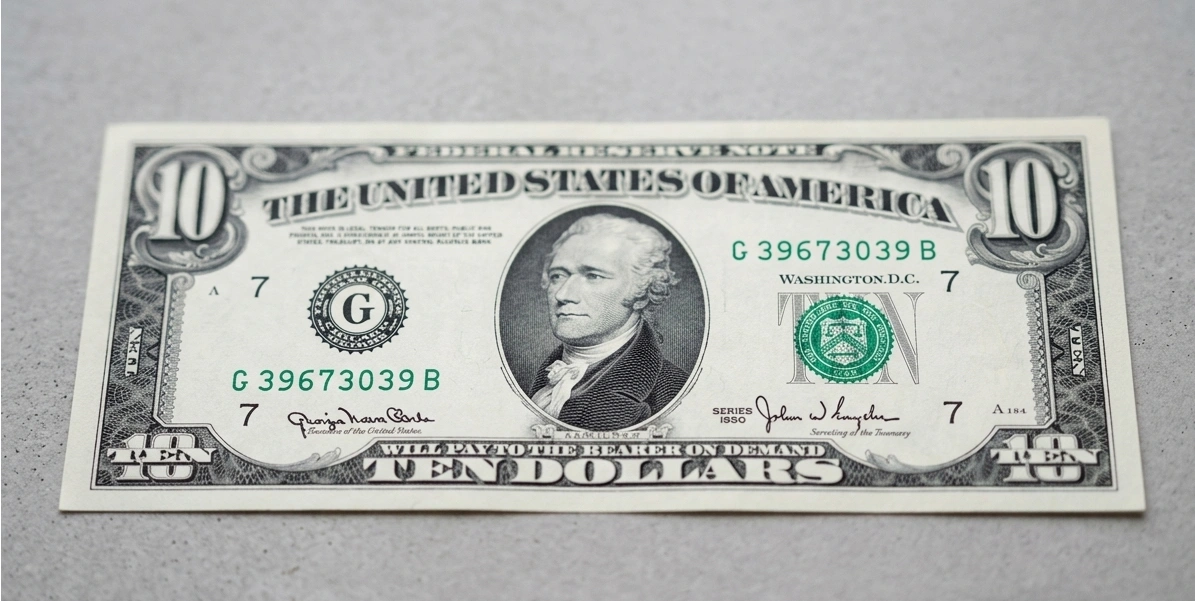
Collectible worth for these objects forms at the intersection of mintage rarity and technical defects.
Material Specifications (NexGen 2026):
Note Width: 155.956 mm
Note Height: 66.294 mm
Unit Mass: 1.00 grams
Sheet Thickness: 0.11 mm
Fiber Density: 85 g/m²
Base Composition: 75% cotton, 25% linen
Applying natural fibers excludes paper glowing under ultraviolet light.
Integrating security elements occurs during the liquid pulp formation stage.
Random distribution of colored security fibers creates a unique pattern for every specimen.
Classifying Unique Serial Numbers
Digital combinations serve as the primary identifier in numismatics.
Numbering machines in Fort Worth and Washington facilities operate according to strict algorithms.
High-Value Number Categories:
Low Numbers: Range from 00000001 to 00000100.
Radars: Sequences maintaining the same value when read in both directions.
Solids: Banknotes featuring eight identical digits.
Ladders: Continuous digit rows in ascending or descending order.
Binaries: Numbers consisting exclusively of two alternating digits.
Market value indicators for Radar numbers in April 2026: Grade Very Fine 25: $45 → Grade Gem Uncirculated 66: $280.
Premiums for a Solid consisting of eight sevens reach $3,500 at specialized auctions.
Statistical probability of finding a perfect Ladder stands at 1 in 96,000,000 units.
Mechanics of Printing Error Formation
Technological processes involve applying three ink layers under varying pressure levels.
Feeding mechanism failures or plate contamination leads to the appearance of collectible errors.
Defect Type | Description | Market Impact |
Cutting Errors | Shifted borders catching the next note | Price up 1200% |
Double Printing | Two identical images overlaid with a shift | Rare specimen status |
Ink Insufficiency | Partial missing of portrait or seal elements | Premium depends on area |
Overprint Errors | Third layer printed over the second with inversion | High-tier rarity |
Shifting a printing plate by 2 mm → Price increase of 150% over face value.
Inverting a serial number on the back side is considered a critical production failure.
Sales Statistics and Auction Records
US rare banknote markets demonstrate a steady capital inflow during 2024–2026.
Investors view printing errors as assets with low correlation to stock indices.
Confirmed Trading Results:
1934 $10 with shifted printing (Grade 64): $4,200
Modern ten-dollar note with inverted front (2017A): $18,500
Note with serial number 00000002 (2013 Series): $6,800
"Ink Smear" error (Grade 65): $950
Price change dynamics for rare Low Number series: 2021: +3.2% → 2022: +4.8% → 2023: +7.1% → 2024: +6.4% → 2025: +9.2%.
Increasing demand for lots holding PCGS Banknote professional certification.
Ownership history transparency raises the final asset value by 15–20%.
Verification Systems and Authenticity Markers
Presence of a printing error should not cancel out basic security elements.
Counterfeiters often imitate defects to hide low-quality fake production.
Authenticity Check Algorithm for Anomalous Notes:
Back-lighting test: Checking for the Hamilton watermark.
Thread check: Orange luminescence of the plastic strip in UV light.
Microprinting analysis: TEN DOLLARS USA text clarity under magnification.
Tactile test: Feeling relief on THE UNITED STATES OF AMERICA inscription.
Or just use the best coin appraisal app.
Using color-shifting ink on the 10 numeral is mandatory for all series after 2006.
Transitioning from Copper to Green must happen smoothly.
Lacking ink reaction during tilting → Evidence of a crude forgery.
Sheet Production and Numbering Logic
Bureau of Engraving prints money in sheets of 32 or 50 banknotes.
Every position on the sheet holds an alphanumeric identifier.
Cause and Effect in Printing: Sheet feed sensor failure → Incorrect positioning → Layer alignment error.
Printing cylinder contamination → Repeating smudge on every 32nd sheet → Systematic error.
Finding a repeating error reduces its individual market worth.
Unique, non-systemic failures are valued 5 times higher than repeating defects.
Integrating neural network vision in 2026 at factories reduced error output by 40%.
New errors from the 2025–2026 runs are becoming significantly rarer.
Specifics of Star Replacement Banknotes
A star symbol at the end of a serial number replaces the final suffix letter.
Such notes are printed to compensate for sheets rejected during quality control.
Market Indicators for Star Series:
2013 Series: 12.8 million mintage → $35 (UNC)
2017 Series: 9.6 million mintage → $55 (UNC)
2017A Series: 6.4 million mintage → $85 (UNC)
2021 Series: 3.2 million mintage → $140 (UNC)
Star note percentages relative to total volume remain below 1%.
Rarity of a specific issuing bank (e.g., Minneapolis or Dallas) affects the price.
Collecting full sets from 12 banks within one series is a classic strategy.
Architectural Details and Reverse Errors
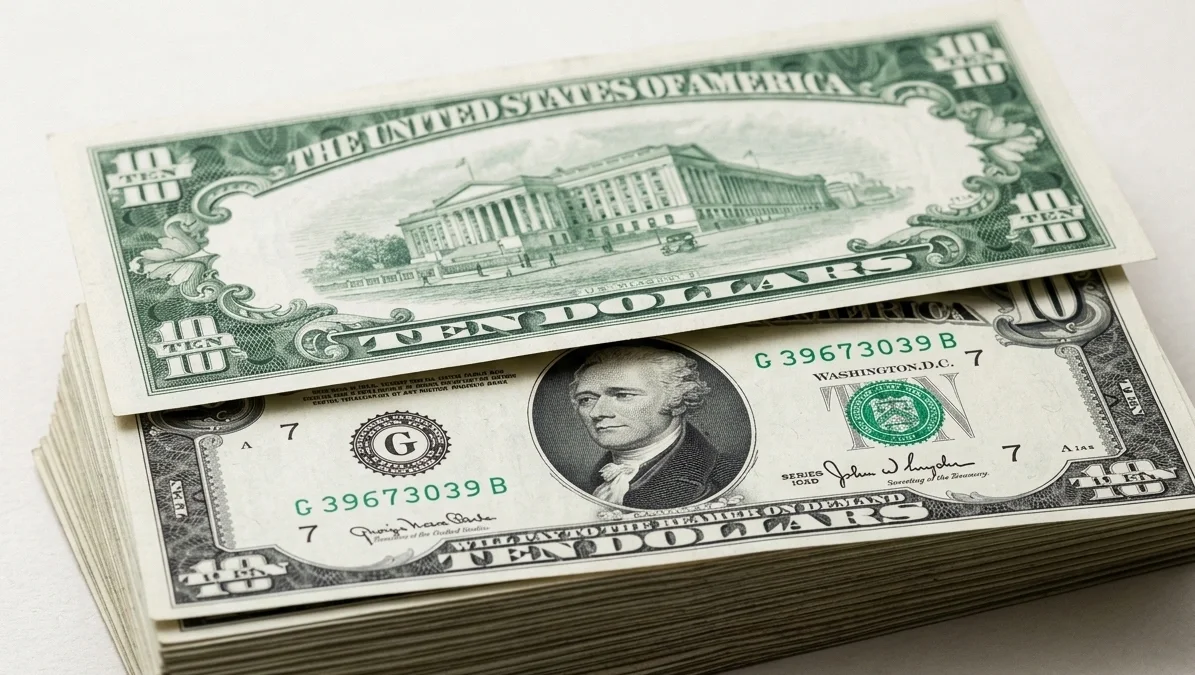
US Treasury Building images on the back contain thousands of microscopic lines.
Errors on this side occur less frequently due to specific ink drying conditions.
Reverse Control Zones:
IN GOD WE TRUST text: checking letter boundary clarity.
Building Facade: searching for missing graphic elements.
Guilloche Frames: identifying pattern overlays.
Green 10 Numeral: controlling color intensity.
Shifting the reverse relative to the front is called an orientation error.
Rotating an image by 180 degrees turns a $10 bill into a rarity priced from $2,500.
Laser alignment sensors in 2026 have almost entirely eliminated such cases.
Long-term Asset Conservation
Paper money is subject to natural aging and fiber structure breakdown.
Banknote prices drop by 50% upon the appearance of a single center fold.
Conservation Instructions for Investment Notes:
Using acid-free holders: protection against yellowing.
Temperature control: maintaining a stable 20 degrees Celsius.
Air humidity: strict limits within 40–50%.
Light exclusion: preventing ink pigment fading.
Professional grading fixes the condition within a sealed capsule.
Certified star notes grow in value 8% faster than regular specimens.
Investors in 2026 prioritize grades of 67 and above.
Inflation and Digitalization Impacts
Currency devaluation indirectly stimulates interest in rare material assets.
Physical $10 bills become collectible items as cash volumes shrink.
Trends for 2024-2026:
Low denominations leaving active circulation.
Rising popularity of online auctions with instant verification.
Using digital twins to confirm provenance.
Increasing value of physical printing errors as "analog artifacts."
Cashless payment shares in the US reached 82% in 2025.
Reducing printing volumes → Fewer total errors → Growing scarcity.
Statistics for worn note removal show the $10 lifespan dropping to 4 years.
Sheldon Scale Condition Analysis
Final $10 bill worth is determined by a 70-point system.
A 1-point difference can mean a price gap of several hundred dollars.
Grade | Condition Description | Market Status |
70 Perfect UNC | Ideal centering, no handling traces | Museum level |
65–69 Gem UNC | Excellent paper, minimal printing flaws | High liquidity |
50–58 About UNC | Barely visible counting or storage trace | Mid-tier segment |
20–35 Very Fine | Signs of circulation, several clear folds | Minimal value |
Losing 10% of paper density due to moisture reduces the grade by 15 points.
Using an iron to smooth out folds is detectable under microscopy.
Such actions permanently strip a banknote of its collectible status.
Owner's Express Diagnostic Guide
Discovering a potentially valuable banknote requires sequential actions.
Most "errors" turn out to be simple damage from circulation upon verification.
Checklist:
Shift → Compare margins on the right and left.
Number → Verify digit symmetry.
Color → Compare with another note from the same series.
Font → Look for blurred or double letters.
Using a coin appraisal app free with 10x zoom allows for seeing the intaglio printing structure.
Presence of a micro-mesh is a guarantee of paper base authenticity.
Real-time searching in sold-lot databases clarifies the current price.